
LLMs
AI Productivity
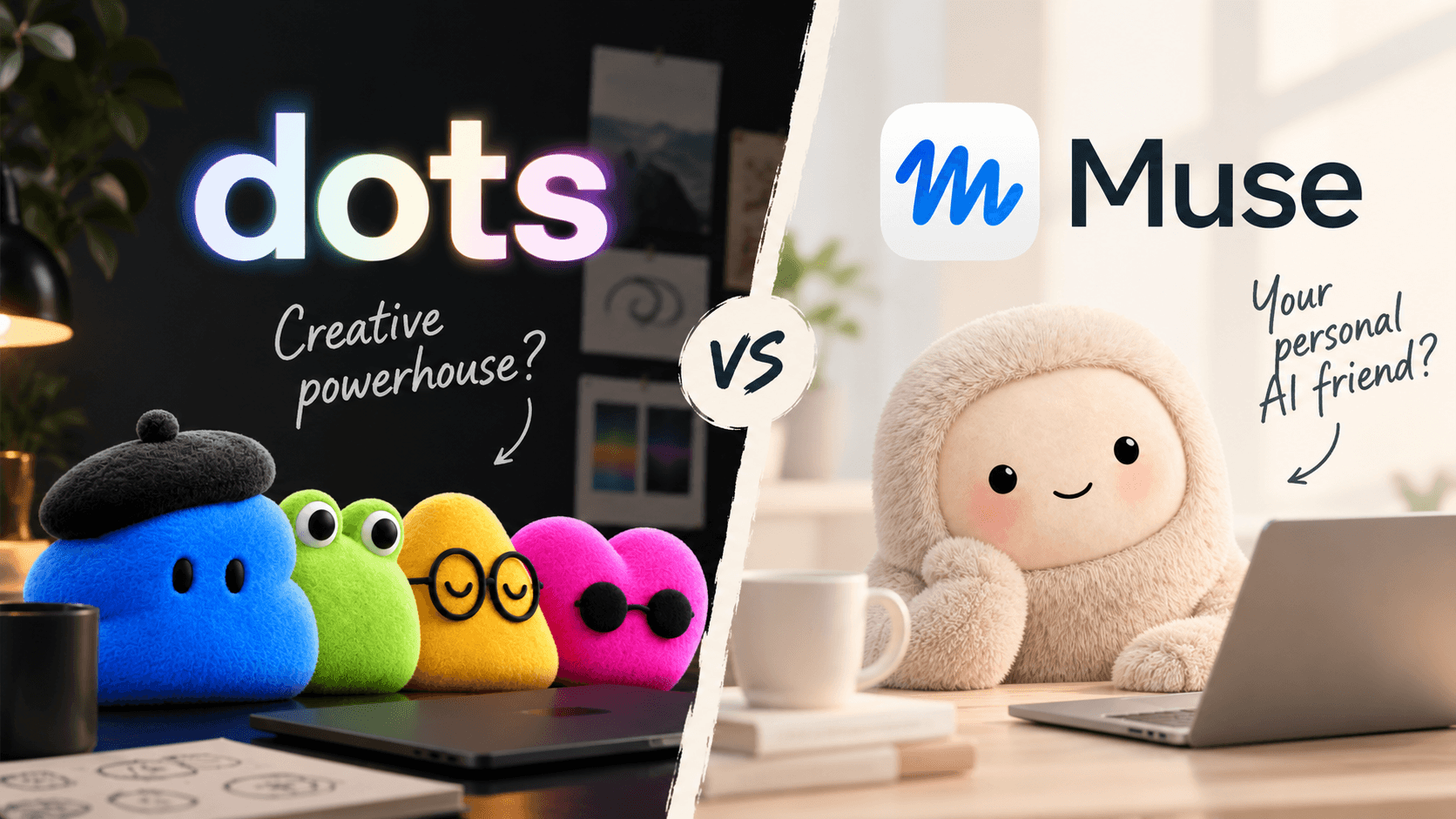
OpenAI Dots vs Meta Muse: Price, Safety and Fit (2026)
OpenAI Dots vs Meta Muse: Dots needs a $100 Pro plan, Muse starts free and hit 6.6M downloads. We compare models, cost, safety and which fits your team.
•15 min read
Microsoft’s Agent Lightning is an open-source trainer layer for AI agents, using RL and fine-tuning to turn static LangChain/OpenAI agents into learning systems.
Most of today’s AI agents are static.
You carefully wire them up with LangChain / AutoGen / OpenAI Agents… and once the flow works, that’s it. The agent might look smart, but it’s not really learning from its own runs, failures, or rewards.
Microsoft’s Agent Lightning is trying to change that.
It’s an open-source framework that sits around your existing agents and turns them into something trainable – using techniques like reinforcement learning (RL), automatic prompt optimization (APO), and supervised fine-tuning. And the punchline: you can plug it into almost any agent setup with (almost) zero code changes.
Think of it as:
🏋️ “The absolute trainer to light up AI agents.”
Let’s break down what it is, how it works, and why it actually matters if you’re building serious agentic systems.
At a high level, Agent Lightning is a training and optimization layer for AI agents – not a replacement for your agent framework.
You keep your existing stack:
…and you plug Agent Lightning in as the trainer that:
Key design goal: decouple agent execution from training.
You don’t have to rewrite your agent to fit some new RL library. Agent Lightning wraps the runs, models the workflow as a Markov decision process (MDP), and uses its own RL algorithm (LightningRL) to optimize agent behavior.
Agent Lightning basically addresses the pain you’ve probably felt if you’ve built any non-trivial agents:
Works with almost any agent framework
It’s designed to be framework-agnostic – LangChain, OpenAI Agents, AutoGen, CrewAI, Microsoft Agent Framework, or custom code.
(Almost) zero code changes
You don’t rebuild your agent from scratch. You sprinkle in small helper calls like agl.emit_xxx() or let its tracer observe prompts, tool calls, and rewards automatically.
Supports multiple optimization methods
It’s not “RL-only”. The framework is built to support:
Plays nicely with multi-agent systems
Modern apps are often multi-agent: planners, workers, critics, tool routers. Agent Lightning can selectively optimize one or more agents within a larger workflow instead of forcing a monolithic setup.
Bridges “cool demo” → “learning system”
Microsoft explicitly positions it as a way to move beyond static, pre-trained models into adaptive, learning-based agents that improve with real-world usage.
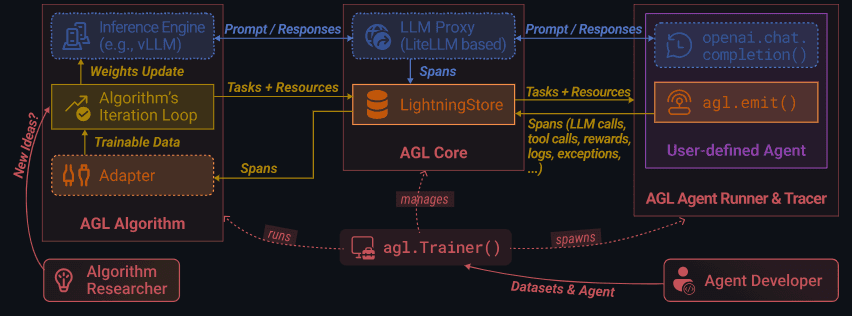
Under the hood, Agent Lightning is built around a few core ideas:
As your agent runs, it produces events:
Agent Lightning turns these into structured spans — think traces that capture context, timing, and relationships between steps.
Those spans and task metadata flow into LightningStore, a central hub that keeps:
in sync, so training can operate on a clean, consistent view of what your agents actually did.
They use a Training-Agent Disaggregation design:
This decoupling is what allows the framework to plug into any agent infrastructure without owning your entire runtime.
The research paper introduces LightningRL, a hierarchical RL algorithm with a credit assignment module that breaks down long trajectories into useful training transitions. This is what lets RL handle:
So instead of being stuck with toy tasks, you can train agents that operate in realistic environments like text-to-SQL, RAG pipelines, or complex tool chains.
If you’re serious about agentic systems, Agent Lightning is worth watching closely.
It doesn’t try to compete with LangChain, AutoGen, OpenAI Agents, or other frameworks. Instead, it sits alongside them as a universal trainer that:
In other words:
Static agents are the past.
Agent Lightning is a glimpse of how learning agents might become the norm.
We can explore how advanced training methods make your AI agents more effective.
Continue exploring these related topics
OpenAI Dots vs Meta Muse: Dots needs a $100 Pro plan, Muse starts free and hit 6.6M downloads. We compare models, cost, safety and which fits your team.
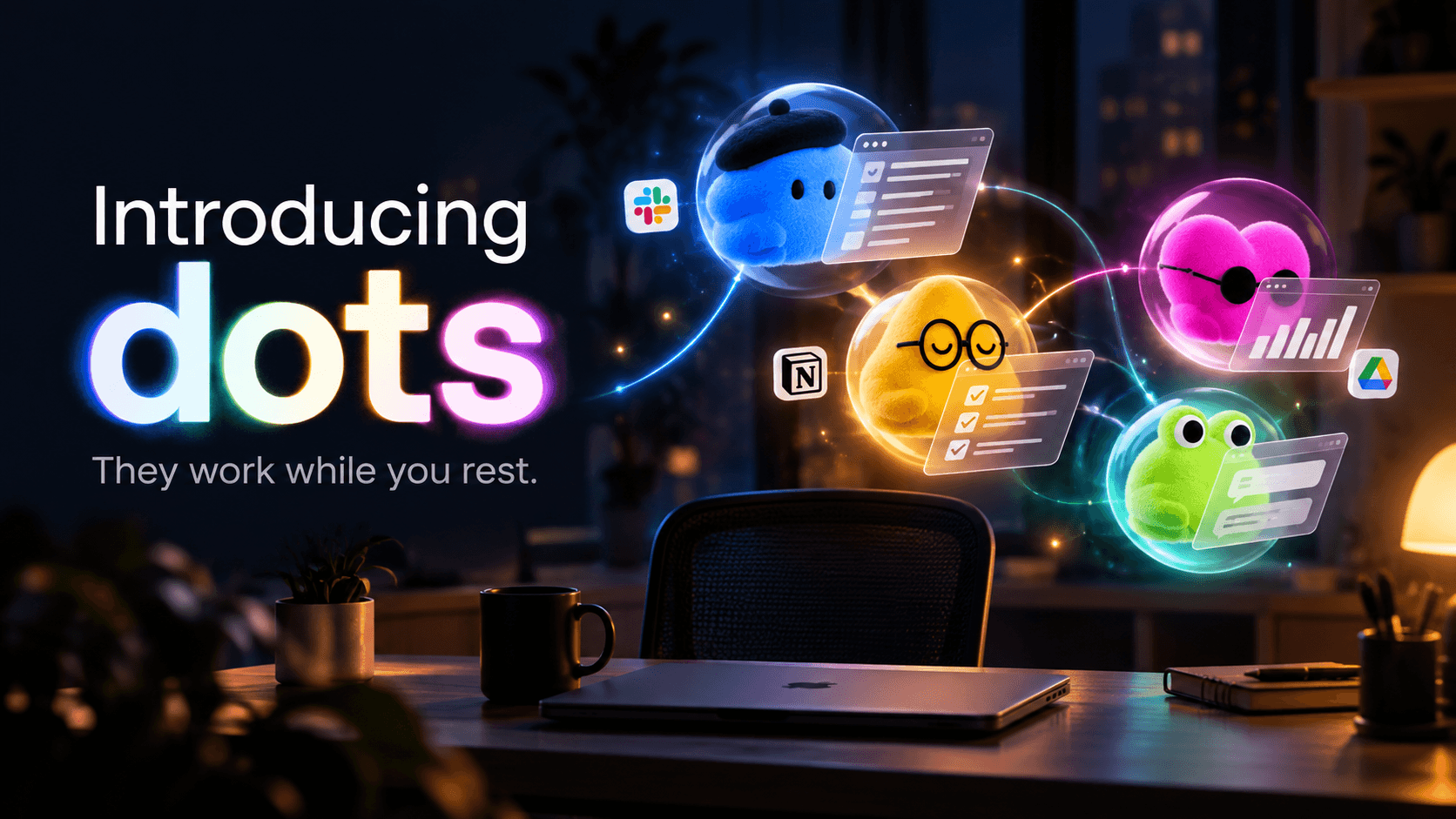
OpenAI Dots are always-on GPT-6 Astra agents with their own cloud computer and 4,000+ app plugins. Here's what they do, what they cost, and what to lock down.
Master the art of building production-ready AI Voice Agents in this step-by-step LangChain tutorial.