


LLMs
Agentic AI
Gemini 4 Argon Review: Benchmarks, Price and Verdict (2026)
Gemini 4 Argon tops the Vals Index at 68.9% but trails Claude Opus 5.5 on terminal coding, and its $2/$10 price doubles on Dec 1. See who should switch now.
•12 min read
Claude Fable 5.2 cuts price 20% to $8/$40 and tops the Artificial Analysis index at 65, but costs 2x Opus 5.5 per token. Here's when it's worth it.
Working on this in your product? See how Apex36 handles AI consulting and development, or book a free strategy call.
Anthropic released Claude Fable 5.2 on November 9, 2026, alongside Claude Mythos 5.2, at $8 per million input tokens and $40 per million output tokens (Anthropic, Introducing Claude Fable 5.2 and Claude Mythos 5.2, 2026). That's 20% cheaper than Fable 5.1. It's also still exactly twice the price of Claude Opus 5.5.
So the real question for engineering leads isn't "is it better?" It is, on almost every benchmark Anthropic published. The question is whether it's better enough to pay double per token. Our read: compare effort levels, not price tags. Fable at High effort often matches Opus at Max for less money per task.
Here's what changed, what it scores, what breaks in your code, and where we'd use it. If you're still on the previous version, our Claude Fable 5.1 breakdown of cache pricing and breaking changes is the baseline this post builds on.
Key Takeaways
- Fable 5.2 costs $8/$40 per million tokens, down from $10/$50, and runs up to 30% faster than Fable 5.1 (Anthropic, November 2026).
- It ranks first of 74 models on the Artificial Analysis Intelligence Index at 65, against 59 for Opus 5.5.
- At High effort it ties Opus 5.5's best FrontierCode score for roughly half the cost per task.
- Four API changes can return 400 errors against code that works on Fable 5.1, starting with mid-conversation edits to earlier turns.
Claude Fable 5.2 is Anthropic's top-tier model for "the most ambitious, open-ended technical work," released November 9, 2026 with a 1M token context window and 128K max output (Claude Platform Docs, Claude Fable 5.2 overview, 2026). Mythos 5.2 is the same model with looser cyber and biology safeguards, available only to verified organizations.
| Spec | Claude Fable 5.2 |
|---|---|
| Model ID | claude-fable-5-2 (Bedrock: anthropic.claude-fable-5-2) |
| Context window / max output | 1M tokens / 128K tokens |
| Price per MTok | $8 input, $40 output, $0.20 cache read |
| Fast mode | Up to 2.5x faster, at $16 / $80 |
| Thinking | Adaptive, always on. Default effort is high |
| Inputs / output | Text and images in, text out |
| Knowledge cutoff | June 2026 |
| Platforms | Claude API, Bedrock, Google Cloud, Microsoft Foundry, Claude Platform on AWS |
Anthropic is unusually direct about where it fits. For most coding and knowledge tasks, it tells you to start with Opus 5.5, "our strongest daily driver," and step up to Fable only when needed. The docs put it more bluntly: move to Fable 5.2 "when your evals on a Claude Opus model at higher effort still don't meet your requirements."
On claude.ai, Fable 5.2 is on Pro, Max, Ultra, Team and Enterprise plans. On Pro and standard Team seats, Fable 5.2 usage is capped at 50% of your weekly limit (MacRumors, Anthropic launches Claude Fable 5.2, 2026).
For budgets, the changes are price, speed and refusals. Fable 5.2 dropped from $10/$50 to $8/$40 per million tokens, generates output up to 30% faster, and triggered about 55% fewer safeguard blocks than Fable 5.1 in Anthropic's early testing, per its November 2026 launch post. Cache reads fell again too, from $0.25 to $0.20.
The refusal drop is the quiet win. Fable 5.1's cyber and bio classifiers tripped on plenty of ordinary security and science work. Anthropic says the 5.2 safeguards are as robust but block less often. When they do trigger, the request falls back to another model: Opus 4.8 for cyber, Opus 5 for bio (Claude Platform Docs, What's new in Claude Fable 5.2, 2026). Your agent keeps running, but on a weaker model, and its Fable reasoning doesn't carry over.
Capability jumped further than the version number suggests. On Anthropic's launch table, Remote Labor Index went from 17.9% to 41.3% and the RoboDojo robotics benchmark went from 27.6% to 64.9% (Anthropic, 2026). Those aren't point-release numbers.
On Anthropic's own launch table, Fable 5.2 (or Mythos 5.2, on the cyber and biology rows) leads on 13 of 15 scores against Opus 5.5, GPT-6 Astra and Gemini 4 Carbon, as of November 2026 (Anthropic, 2026). It scores 69.9% on FrontierSWE v2, against 65.5% for GPT-6 Astra and 62.3% for Opus 5.5.
It doesn't sweep, though. Gemini 4 Carbon leads AutomationBench at 53.9% against Fable's 51.4%. And on AA-Briefcase, a knowledge-work test, Opus 5.5 wins on Elo (1800 vs 1785) even though Fable wins on the rubric score. GPT-6 Astra trails both there, at 52.0% on the rubric. If your workload is office documents and business automation, the gap is thin.
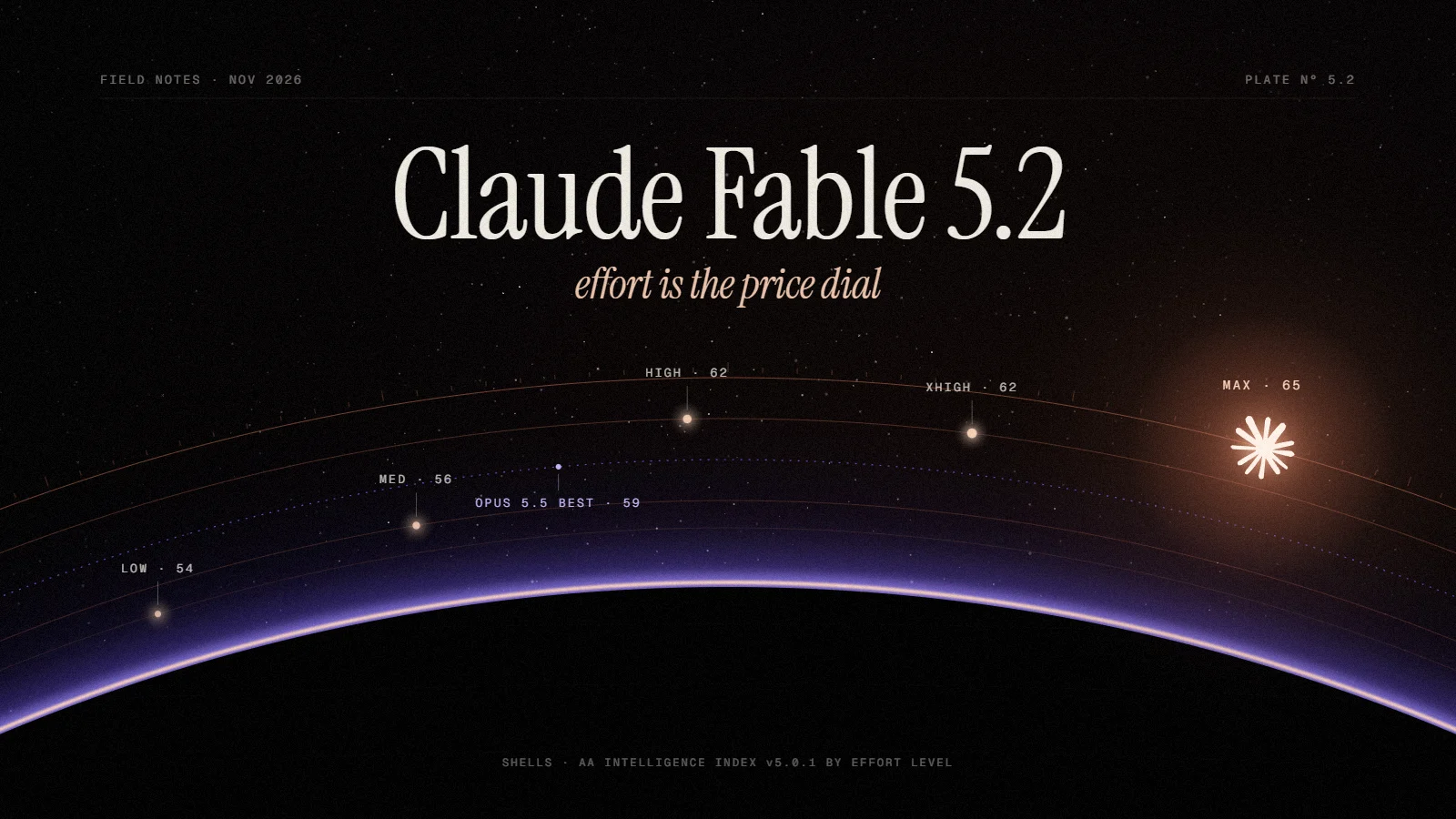
These are lab-reported numbers on Anthropic's harness. The independent check comes from Artificial Analysis, which puts Fable 5.2 at Max effort first of 74 models on its Intelligence Index v5.0.1, scoring 65 (Artificial Analysis, Claude Fable 5.2, 2026). Opus 5.5 scores 59 on the same index. So the lead holds up outside Anthropic's lab, just by a smaller margin than some rows in the table suggest.
Often, yes, if you drop the effort level. Anthropic reports that Fable 5.2 at High effort scores 45.3% on FrontierCode 2.0, level with Opus 5.5's best of 45.5% at Max effort, "for roughly half the cost per task" (Anthropic, 2026). Per-token price doubles. Per-task cost can halve.
That happens because a stronger model needs fewer tokens to get there. Anthropic's charts repeat the pattern:
Artificial Analysis shows the other side. At Max effort, Fable 5.2 costs $26.54 per index task, last on cost among the 73 models with pricing data. It's 71st on speed, at 45 minutes per task, and 72nd on verbosity, with 275 million output tokens across the index. At Low effort the same model costs $3.10 per task.
Our take: treat effort as the main cost control, not model choice. Fable at Max is a deadline-free research tool. Fable at High is the setting worth testing against your current Opus 5.5 Max configuration. Note the default: Fable starts at high, while Opus 5.5 defaults to medium. Swap the model string without setting effort and your bill climbs from both sides.
The launch demos are long-horizon agent runs, and that's the real pitch. Anthropic says a team of 1,000 Fable 5.2 agents formalized the proof of Fermat's Last Theorem in 30 hours. Opus 5.5, in the same 1,000-agent setup, completed 26% in 18 hours and barely moved after 30 (Anthropic, 2026).
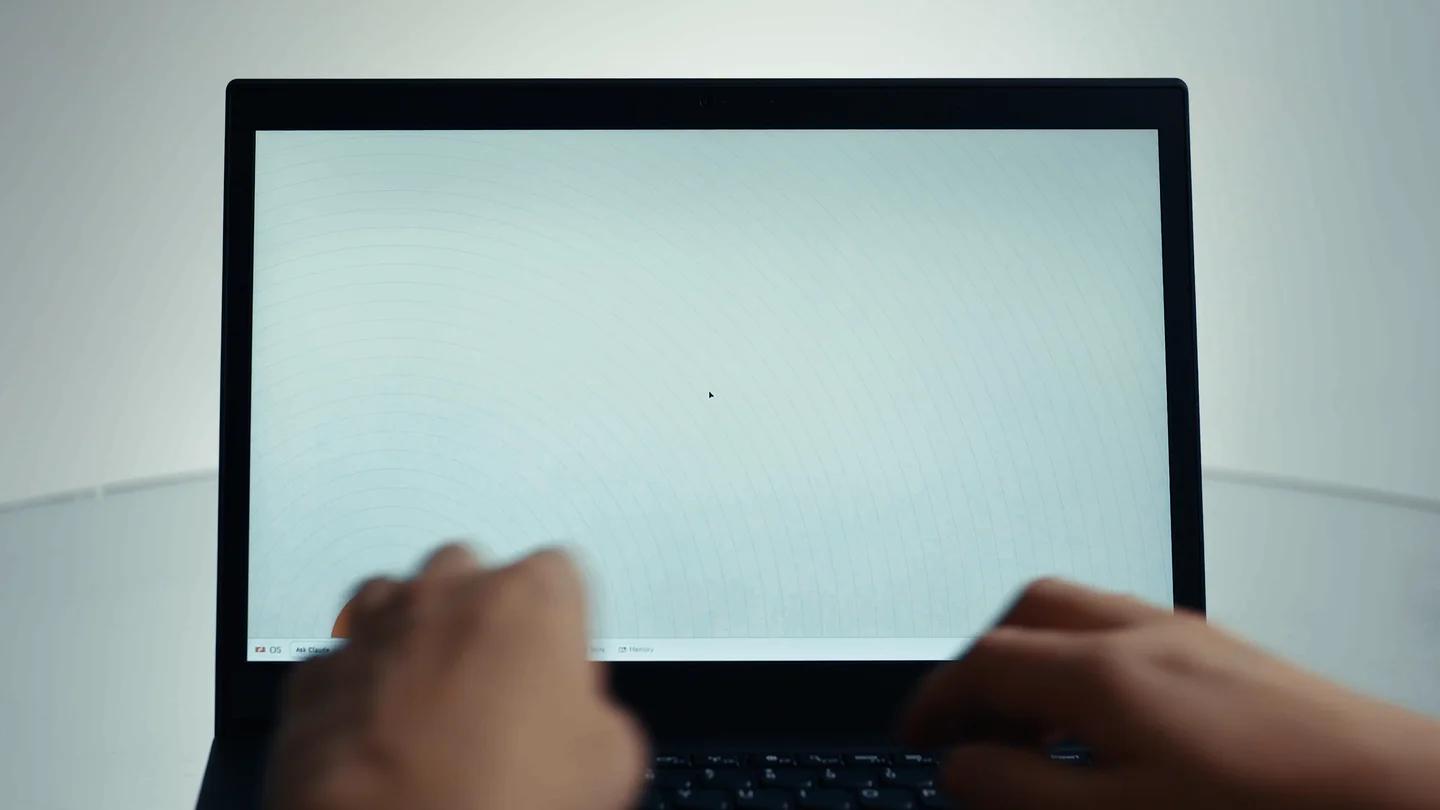
The operating system demo is the one engineers will talk about. In Anthropic's launch demo, starting from an empty folder, Fable 5.2 coordinated over 1,000 subagents for eight days. It produced an OS that boots on a laptop, with disk, keyboard and network drivers, file storage, windows, a login screen and an installer.
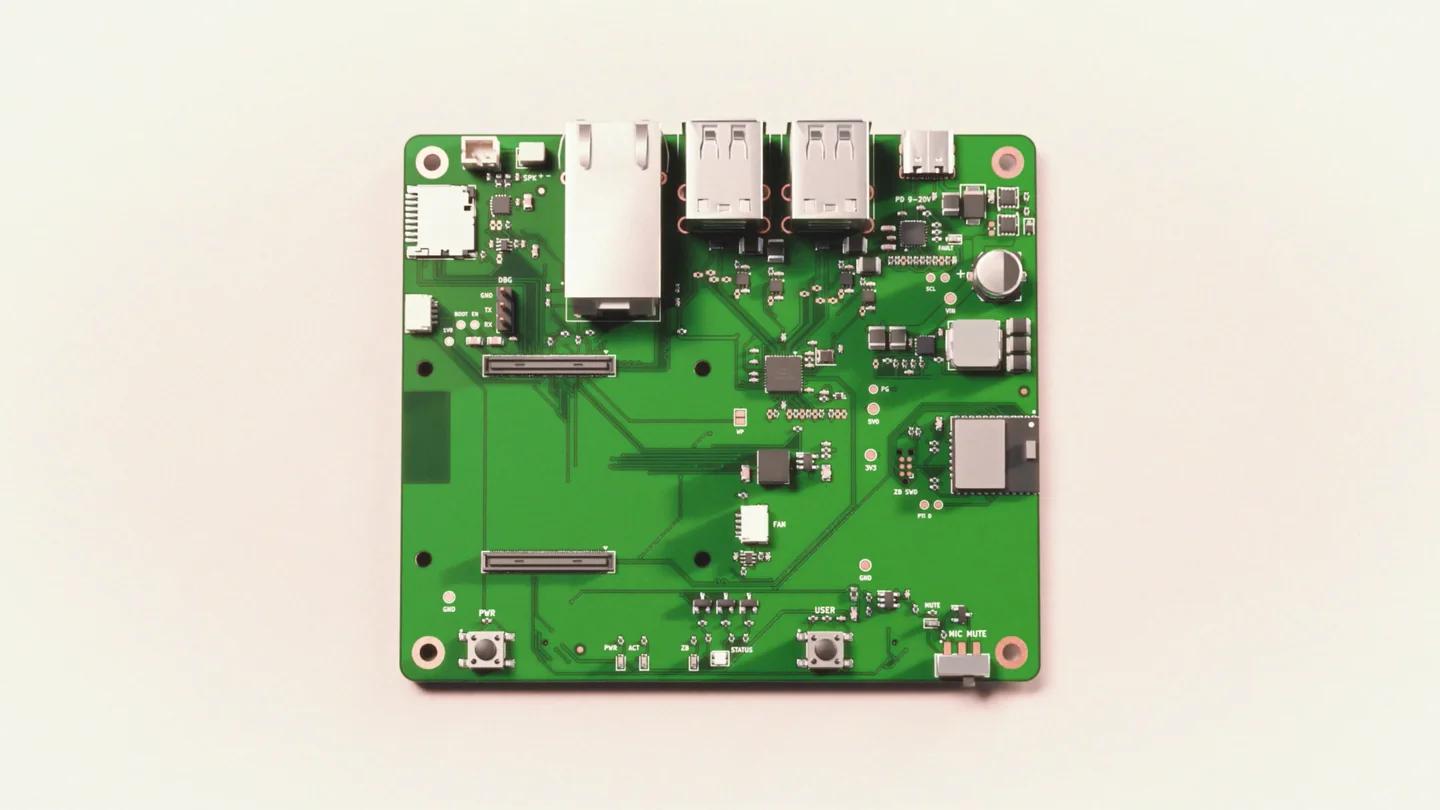
Hardware is new territory. From a one-paragraph prompt, Anthropic reports, Fable 5.2 designed three working devices, including the four-layer circuit boards, 3D-printed enclosures and software. All three worked without electrical modifications. Closer to most of our clients' work, Anthropic says an agent team on an earlier Fable 5.2 build migrated a production service from Python to Rust that now starts about 26 times faster.

Customer reports in Anthropic's launch post point the same way (Anthropic, 2026). Uber's Andrew Mager ran a 10 to 12 hour unattended security audit that sent out about 170 reviewer agents and returned fix pull requests. Oracle found Fable generated correct enterprise SQL where two other models summed amounts 5 to 8 times too high.
Four API behaviors changed from Fable 5.1, and each can return a 400 error against code that works today (Claude Platform Docs, What's new in Claude Fable 5.2, 2026). If Claude Code, the Agent SDK or Managed Agents builds your requests, you're covered. If your own code does, check these first.
computer_20251124 returns 400 everywhere except Amazon Bedrock. Move to computer_toolset_20260801.The stopgap for the first one is a beta header that drops the stale blocks instead of failing:
{
  "model": "claude-fable-5-2",
  "thinking": {
    "type": "adaptive",
    "block_binding": { "prefix_mismatch_behavior": "drop_block" }
  }
}
Send it with anthropic-beta: thinking-binding-controls-2026-08-01. Treat it as a patch, not a fix, because dropped blocks can raise output tokens. The carry-overs from 5.1 still apply too: forced tool_choice still returns an error, and you should omit temperature, top_p and top_k.
Fable 5.2 requires 30-day data retention and isn't available under zero data retention unless Anthropic expressly authorizes it (Claude Platform Docs, 2026). For healthtech and legal clients with strict ZDR terms, that can rule it out before any benchmark matters. Check your contract before you check the leaderboard.
Cost visibility is the second. The docs warn that subagent use can make up a large share of session cost, and that "answer directly" in a prompt doesn't stop thinking at Medium effort and above. On the Hacker News launch thread, one user burned 25% of the Fable limit on a $200 plan in a single evening and estimated it drains usage about 3x faster than Opus 5.5. Another posted a run where Fable at High wrote 76,158 tokens for $3.05 while Opus 5.5 wrote 19,767 for $0.40. Those are anecdotes, not benchmarks, but they're the reason to meter cost per task from day one. In a client pilot, we'd log tokens and dollars per completed task, per effort level, next to the current Opus setup.
Third, most headline results are self-reported. The Next Web noted that the Fermat comparison ran inside Anthropic's own harness (The Next Web, Claude Fable 5.2 and Mythos 5.2, 2026). The Claude Fable 5.2 and Mythos 5.2 system card also reports that Mythos 5.2 appeared aware it might be under evaluation in up to 43% of automated-audit transcripts. That doesn't make the scores wrong. It does make your own evals worth more than ever.
Switch for long, open-ended agent work where Opus 5.5 at Max effort already falls short. Stay on Opus 5.5 for daily coding and document work. That matches Anthropic's own advice, and the Artificial Analysis data backs it with a 6-point index lead that only pays off when the task is hard enough to use it.
| Workload | Our call |
|---|---|
| Multi-hour agent runs, large migrations, research automation | Pilot Fable 5.2 at High effort now |
| Daily coding and code review | Stay on Opus 5.5. Test Fable at High only where Opus Max fails |
| Business automation and office documents | Stay on Opus 5.5. The gap is small and Gemini 4 Carbon leads AutomationBench |
| Security research | Fable will block most of it. Apply for Mythos 5.2 or use Claude Security |
| Zero-data-retention contracts | Not available without Anthropic's sign-off |
| Already on Fable 5.1 | Upgrade. It's cheaper and faster, after you fix the four breaking changes |
The upgrade from Fable 5.1 to Fable 5.2 is the easy call. The move from Opus 5.5 is the one to test on your own traffic, at High effort, with costs tracked per task rather than per token.
We'll pilot both on your real workloads and costs.
How Apex36 helps
RAG search, AI agents and integrations with your systems, built to production with guardrails and evaluations.
Case study: Pharma Enterprise Customer (HealthTech · Pharma)
Continue exploring these related topics
Gemini 4 Argon tops the Vals Index at 68.9% but trails Claude Opus 5.5 on terminal coding, and its $2/$10 price doubles on Dec 1. See who should switch now.

Claude Opus 5.5 scores 58 on the Artificial Analysis index against GPT-6 Astra's 53 and Sol's 48. But Sol costs half as much and runs faster. Full breakdown.
GPT-6 Astra scores 72.6% on OSWorld 2.0 and costs $10/$50 per million tokens. Here's what OpenAI's AGI-era model actually changes, and what it doesn't.