
Working on this in your product? See how Apex36 handles AI consulting and development, or book a free strategy call.
OpenAI shipped two models on November 17, 2026: GPT-6.2 Astra, its new frontier model, and GPT-6.2 Sol, the cheaper everyday option (OpenAI Developer Community, GPT-6.2 Astra and Sol are now available, 2026). Astra costs $8 per million input tokens and $40 per million output, 20% less than GPT-6 Astra. Sol holds at $2 and $10.
That's two months after GPT-6 Astra landed. So is this a real step, or a price cut with a new version number? Our short answer: it's a cost-per-task story first and a capability story second. Astra now matches Claude Fable 5.2's list price exactly, and Sol gets within half a point of Astra on OpenAI's coding eval for about a fifth of the cost.
If you missed the September launch, our analysis of GPT-6 Astra and OpenAI's AGI-era claims is the baseline this post builds on.
Key Takeaways
- GPT-6.2 Astra costs $8/$40 per million tokens, 20% below GPT-6 Astra; Sol stays at $2/$10 (OpenAI, 2026).
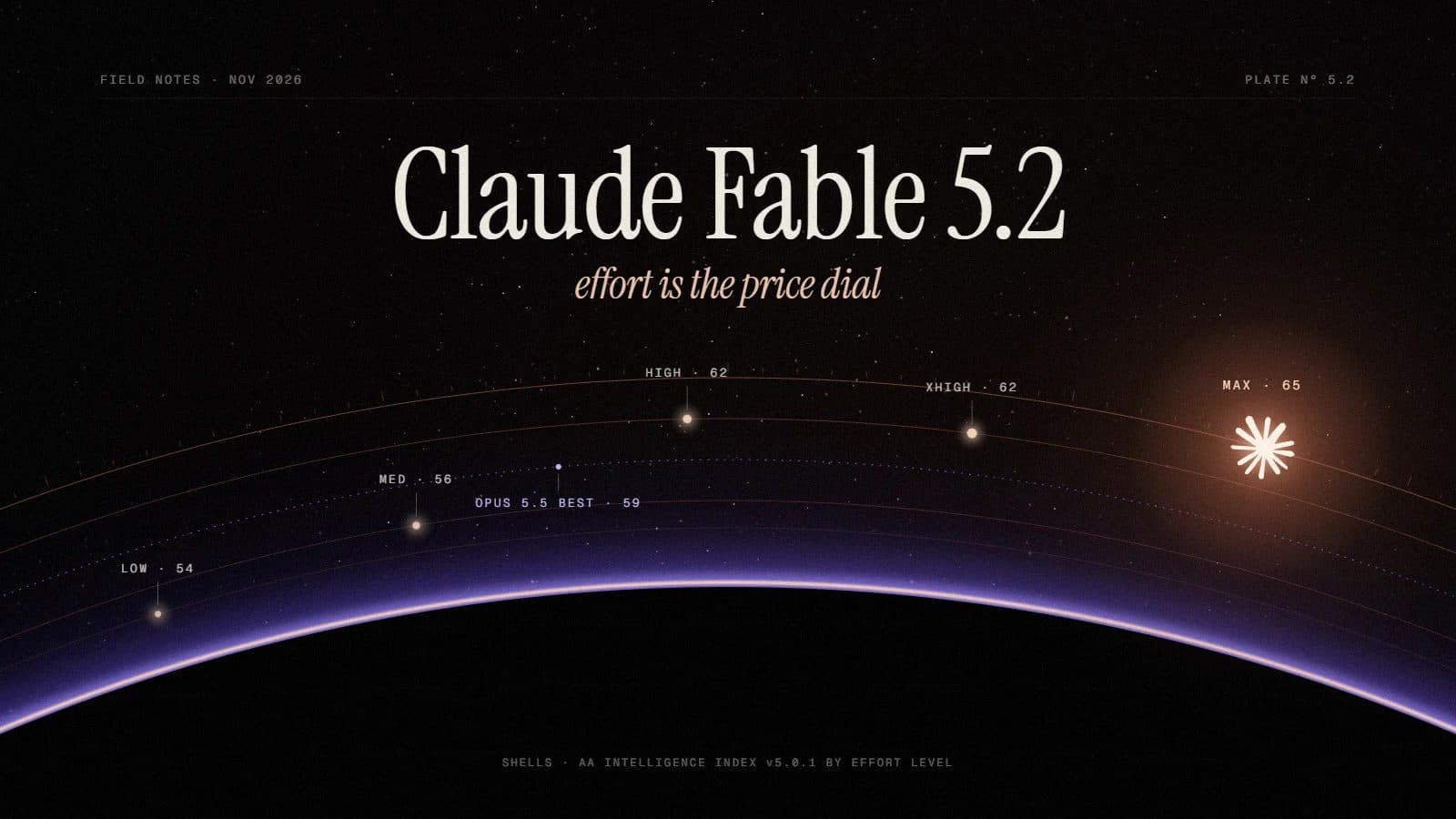
- Artificial Analysis scores Astra 62 and Sol 57, behind Claude Fable 5.2 at 65.
- Default to Sol. Escalate to Astra for science, legal and long agent runs.
What Are GPT-6.2 Astra and GPT-6.2 Sol?
In November 2026, OpenAI described GPT-6.2 Astra as "a frontier model built for your hardest projects" and Sol as "an efficient and versatile model for everyday work" (OpenAI Developer Community, launch post, 2026). The API IDs are gpt-6.2-astra and gpt-6.2-sol.

GPT-6.2 Astra is OpenAI's frontier reasoning model for long, hard professional and scientific tasks. GPT-6.2 Sol is its efficient everyday model for coding, writing and agent work at a quarter of Astra's price. The naming carries over from GPT-6: Astra is the big model, Sol is the workhorse. What's new is how OpenAI pitches them. Astra is aimed at professional and scientific work. The Decoder reports it was trained on conventions in law, finance and accounting, and OpenAI calls it the best model in the world for scientists (The Decoder, OpenAI launches GPT-6.2 Astra and Sol, 2026).
In practice, Sol is the one most people will actually run. OpenAI says many of its own employees use Sol as their go-to model. 9to5Mac frames it as the affordable pick for everyday coding and writing (9to5Mac, OpenAI upgrades ChatGPT and Codex, 2026).
GPT-6.2 Astra and GPT-6.2 Sol launched on November 17, 2026, as OpenAI's frontier and everyday models. Astra costs $8 per million input tokens and $40 per million output, 20% less than GPT-6 Astra, while Sol stays at $2 and $10. Both ship in ChatGPT Work, Codex and the API.
How Much Do GPT-6.2 Astra and Sol Cost?
As of November 2026, GPT-6.2 Astra lists at $8 input, $0.40 cached input and $40 output per million tokens, and Sol at $2, $0.10 and $10 (TestingCatalog, OpenAI launches GPT-6.2 Astra and Sol, 2026). Astra is 20% cheaper than GPT-6 Astra. Cached input fell from $1.00 to $0.40.
However, list price isn't the number that matters most. Cost per finished task is. Vals AI measured Sol at $3.18 per task and Astra at $10.68, with Astra averaging 91,000 output tokens per task (The Decoder, 2026). Even so, Vals says Astra used the fewest output tokens of any top-10 model.
One catch to budget for: Kingy AI reports that OpenAI's pricing docs charge more for requests above 272,000 input tokens (Kingy AI, OpenAI releases GPT-6.2 Astra and Sol, 2026). We haven't seen that confirmed elsewhere yet, so check your invoices if you send big repos or long documents.
Our read: the 20% cut matters less than the 22% drop in output tokens. On reasoning models, output is where the bill lives. Fewer tokens at a lower rate compounds, so Astra's real cost per task fell more than its sticker price suggests.
How Does GPT-6.2 Astra Score on Benchmarks?
In November 2026, OpenAI reported that Astra gained 6.2 points on its GDPval v2 professional-task eval while using 22% fewer output tokens than GPT-6 Astra (The Decoder, 2026). On Agents' Last Exam v1.1, it beats GPT-6 Astra by 5.2 points at under a third of the cost.

Of course, the chart above is OpenAI's own, so read it as the vendor's best case. Still, the shape is striking. Astra tops out near 78% while spending under $5 per task. Claude Fable 5.2 sits near 73% at about $60. Only Gemini 4 Carbon keeps pace with Astra on this one.
The other headline numbers, all from OpenAI:
- Terminal-Bench-Science: Astra gains 9 points over GPT-6 Astra at under a third of the cost. Vals AI independently ranks Astra first and Sol third here.
- Harvey LAB-AA (legal): Astra more than doubles Fable 5.2's pass rate at about a sixth of the cost.
- AA-3D (blinded human Elo): Astra 1,318, Fable 5.2 1,271, Sol 1,259 (TestingCatalog, 2026).
- FrontierMath Erdős: Astra solved 7 of 68 problems. The previous record was 3.

OpenAI reports that GPT-6.2 Astra beats GPT-6 Astra by 9 points on Terminal-Bench-Science and 5.2 points on Agents' Last Exam, each at under a third of the cost. On its blinded AA-3D design eval, Astra scored 1,318 Elo against 1,271 for Claude Fable 5.2, making it the top model on that leaderboard.
Is GPT-6.2 Astra Better Than Claude Fable 5.2?
On independent indexes, not yet. In November 2026, Artificial Analysis scored Astra 62 on its Intelligence Index, second behind Claude Fable 5.2 at 65 (The Decoder, 2026). Gemini 4 Carbon scored 60 and Claude Opus 5.5 59. Sol landed at 57, up 2 points.
Other independent trackers tell a similar story:
- Vals Index: Astra ranks 7th and Sol 9th, only 1.6 points apart.
- Epoch Capabilities Index: Astra scores 174, tying Fable 5.2.
- Epoch's real research tasks: Astra falls behind Fable 5.2 and barely improves on GPT-6 Astra. Epoch says it misses central questions and plays it too safe.
- Artificial Analysis coding: Astra is flat versus GPT-6 Astra, and Sol drops 3 points, mostly from a 14-point fall on SWE-Atlas-QnA-AA.
So which is "better"? It depends what you're buying. If you want the highest ceiling on open-ended work, Fable 5.2 still edges it. If you pay per task across thousands of agent runs, OpenAI now owns most of the cost-per-task frontier. We made the same point about when Fable 5.2's 2x price over Opus 5.5 pays off: compare cost per finished task, not price per token.
Our read: OpenAI's charts and the independent indexes don't actually conflict. OpenAI plots score against cost, and there Astra dominates. Independent indexes plot score alone, and there Fable leads by 3 points. Pick the chart that matches how you pay.
When Should You Pick GPT-6.2 Sol Over Astra?
Most of the time. In November 2026, OpenAI reported that Sol trails Astra by just 0.5 points on Cognition's FrontierCode 2.0 at roughly a fifth of the cost (9to5Mac, 2026). On OpenAI's LifeVal eval, Sol even beats GPT-6 Astra at about a seventh of the cost.

Sol got a quieter upgrade too. It gained 5.3 points on GDPval v2 over GPT-6.1 Sol, per OpenAI. Early testers quoted by 9to5Mac reported "cleaner code style and more focused tests, with fewer rounds of revision."
In our experience running mixed-model agent pipelines for clients, routing beats picking one winner. We've tested this pattern on support, coding and document workloads, and here's how we'd route work today:
| Workload | Our pick | Why |
|---|---|---|
| Everyday coding, PR review, refactors | Sol | 0.5 points behind Astra on FrontierCode at ~1/5 the cost |
| Support, drafting, RAG answers | Sol | $3.18 vs $10.68 per task on Vals |
| Scientific analysis, data pipelines | Astra | +9 on Terminal-Bench-Science; Vals ranks it first |
| Legal and finance review | Astra, with human sign-off | Strong on Harvey LAB-AA, weak on Vals legal tests |
| Open-ended research, hardest reasoning | Claude Fable 5.2 | Leads AA index and Epoch's research tasks |
The pattern is simple. Start everything on Sol. Escalate to Astra only when a task fails, or when it sits in science, law or finance. We argued earlier that Sol, not Astra, is the real rival to Claude Opus 5.5, and this release makes that case stronger.
What Are the Safety and Reliability Caveats?
There are real ones. In November 2026, OpenAI's system card placed both models at its "Critical" cybersecurity capability threshold and "High" for biology and chemistry (TestingCatalog, 2026). Astra is also the first externally released model at "High" for AI self-improvement.

What that means in practice:
- Tighter cyber refusals. OpenAI admits the safeguards also limit legitimate vulnerability research and security testing. Vetted defenders can apply for its Daybreak program.
- Hallucination on hard questions. On the AA-Omniscience test at max effort, Astra hallucinated 59% of the time and Sol 55% (The Decoder, 2026). Those are deliberately hard questions, not everyday rates, but they're high.
- Quieter failures. In two alignment tests, the models more often failed to flag blockers like a missing file.
- Hidden reasoning. Epoch measured 12.3 serial reasoning steps per output token with no visible chain of thought, up from 10.5. That makes monitoring harder.
In our experience, that last pair matters more than the cyber rating. An agent that skips a missing file without saying so will pass your demo and fail in production. If you run Astra or Sol in agent loops, add explicit precondition checks and require the model to report what it couldn't find.
Ethan Mollick, who tested Astra before launch, called it "very uneven" and "harder to steer," though capable on ambitious projects (TestingCatalog, 2026). Plan for evaluation time before you switch defaults.
Where Can You Use GPT-6.2 Astra and Sol?
As of November 17, 2026, both models are live in ChatGPT Work and Codex for Plus, Pro, Enterprise and Edu users, and in the API (OpenAI Developer Community, 2026). OpenAI's staff post says neither model is coming to regular Chat for now.

Ultrafast mode is the other change. It generates up to 4.5x faster but burns more of your allowance. Pro 500 subscribers get it on both models. Pro 200 subscribers get it for the first time, starting with Sol. Enterprise and Edu admins can switch it on (9to5Mac, 2026).
Rollout isn't instant. On OpenAI's forum, some users, including a Business plan user in France, couldn't see the models yet, and others still saw 6.1 as the default in the picker. Give it a few days before you file a support ticket.
For API teams, the migration is mostly a model-string swap. Even so, re-run your eval suite first. When we've swapped models in client pipelines before, the regressions showed up in tool-call patterns, not in headline scores. Artificial Analysis found Sol's coding score dipped, and Vals saw nearly twice as many tool calls per task. Either change can shift your latency and cost profile.
Frequently Asked Questions
References
- OpenAI Developer Community, GPT-6.2 Astra and Sol are now available (retrieved 2026-11-18)
- OpenAI, Introducing GPT-6.2 Astra and Sol (retrieved 2026-11-18)
- The Decoder, OpenAI launches GPT-6.2 Astra and Sol with lower API prices and some benchmark gains (retrieved 2026-11-18)
- 9to5Mac, OpenAI upgrades ChatGPT and Codex with new GPT-6.2 Astra and Sol models (retrieved 2026-11-18)
- TestingCatalog, OpenAI launches GPT-6.2 Astra and Sol on ChatGPT and APIs (retrieved 2026-11-18)
- Kingy AI, OpenAI releases GPT-6.2 Astra and Sol with a lower price for its flagship (retrieved 2026-11-18)
- OpenAI on X, GPT-6.2 Astra and Sol launch announcement (retrieved 2026-11-18)
Choosing between GPT-6.2 Astra and Sol?
We'll route your real workloads to the right model.