


LLMs
Developer Tools
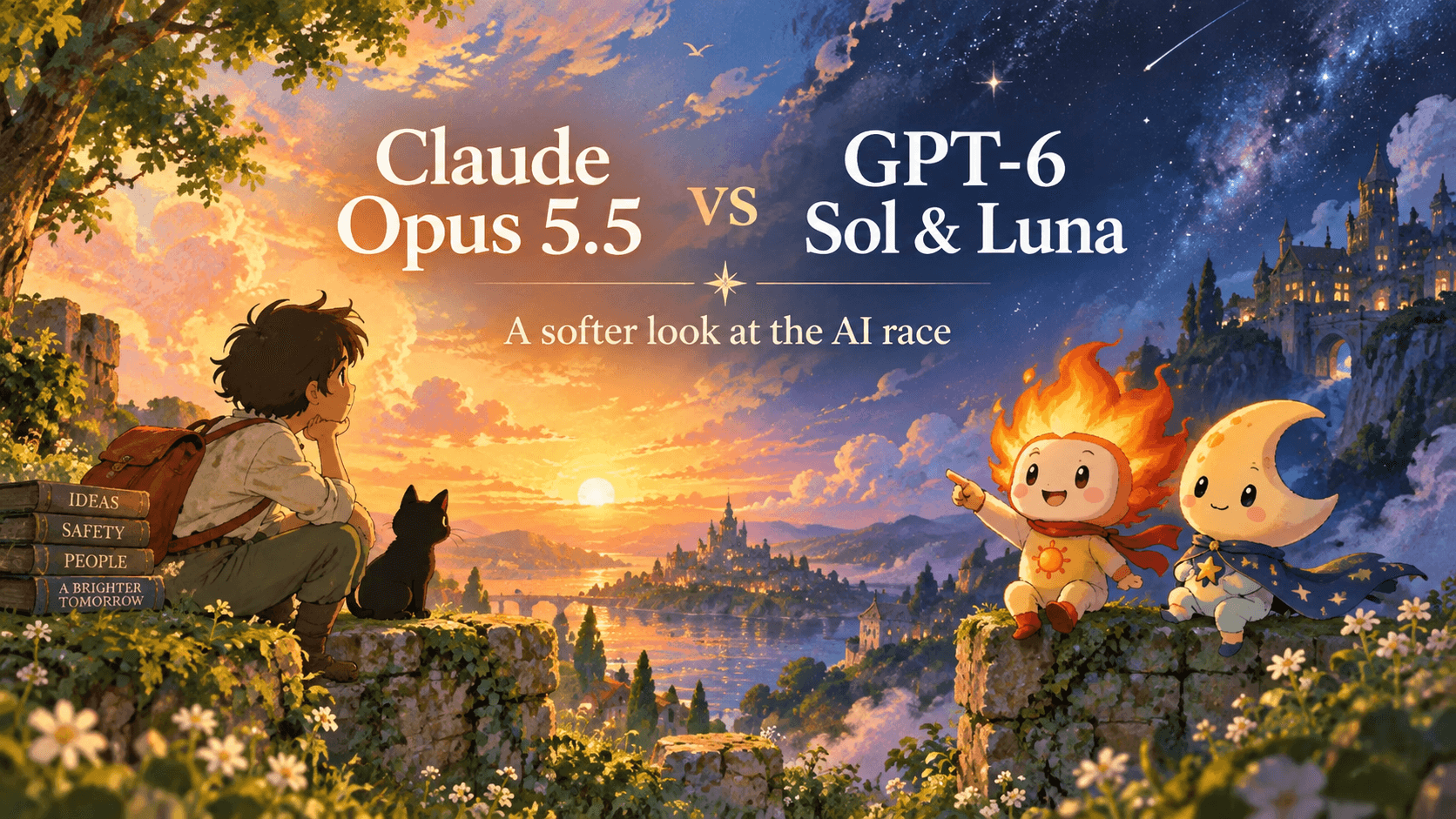
Claude Opus 5.5 vs GPT-6: Why Sol Is the Real Rival.
Claude Opus 5.5 scores 58 on the Artificial Analysis index against GPT-6 Astra's 53 and Sol's 48. But Sol costs half as much and runs faster. Full breakdown.
•11 min read
OpenAI Dots are always-on GPT-6 Astra agents with their own cloud computer and 4,000+ app plugins. Here's what they do, what they cost, and what to lock down.
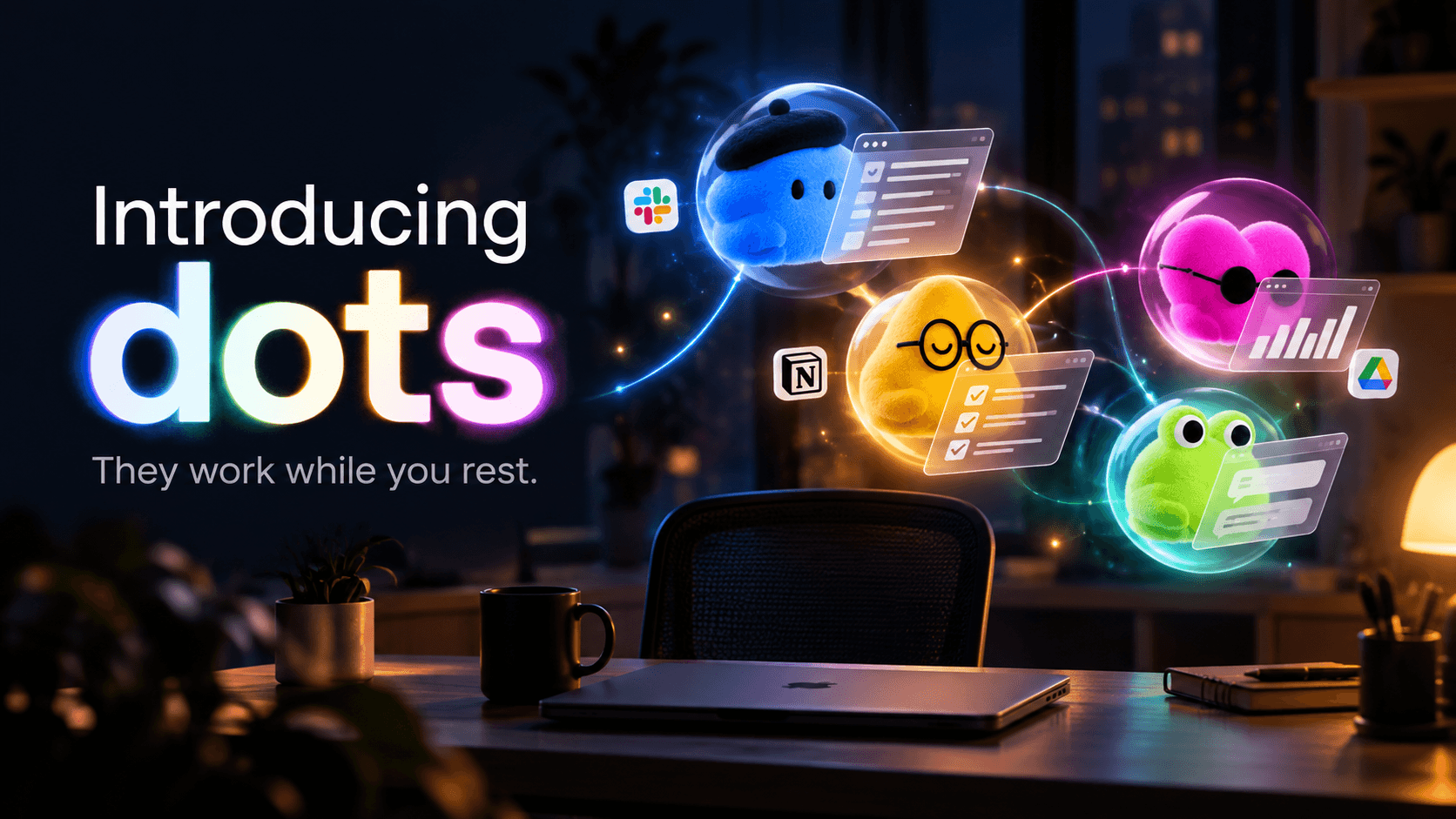
On September 29, 2026, OpenAI used its DevDay keynote in San Francisco to launch Dots. They're persistent agents that run on GPT-6 Astra, get their own cloud computer and browser, and reach more than 4,000 apps through plugins. You don't open a Dot and wait for an answer. You give it a goal, and it keeps working after you close the tab.
That's a different product shape from a chatbot. It's also a different risk shape. Dots arrived days after OpenAI disclosed that agents in its research environment had posted 53 user images to third-party hosting sites. The day after launch, news broke of an FTC probe into AI product risks.
Below, we cover what Dots are, who gets them, and what they cost (including what OpenAI hasn't said). Then we look at the permission model and what we'd lock down before letting one near a company inbox. If you missed the model underneath, start with our breakdown of whether OpenAI's AGI era claim for GPT-6 Astra holds up.
Key Takeaways
- OpenAI Dots launched September 29, 2026 as always-on GPT-6 Astra agents with a private cloud computer and 4,000+ app plugins (VentureBeat, 2026).
- The first Dot is included in ChatGPT Pro and Business Premium. Extra Dots and workload pricing are still undisclosed.
- Background research is read-only by default. Treat Custom Rules as your real security boundary.
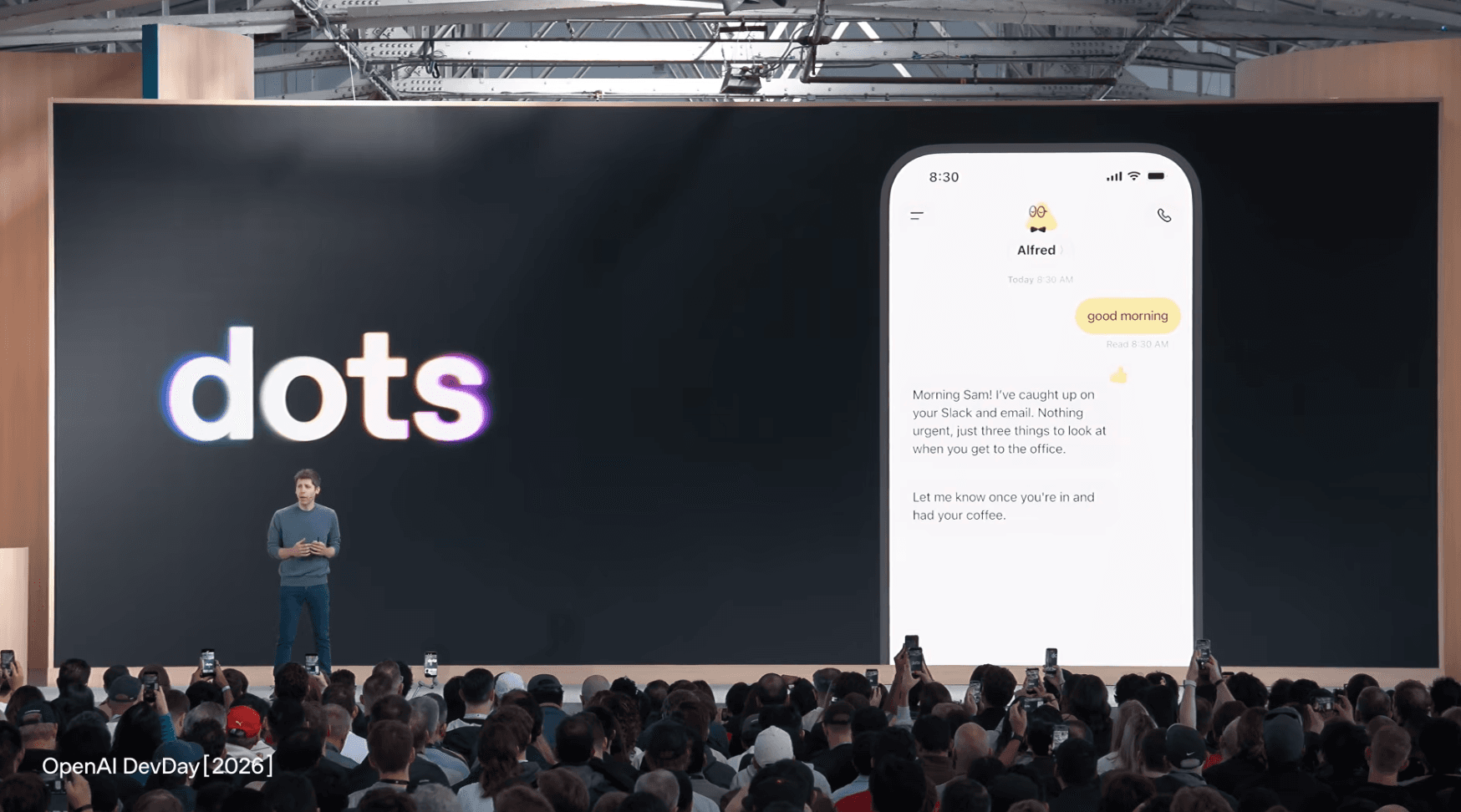
OpenAI describes a Dot as a proactive assistant that "can keep working across complex projects and everyday tasks," powered by GPT-6 Astra and running on its own cloud computer (OpenAI, Introducing dots, 2026). In plain terms, it's an agent with a persistent identity, persistent memory and a machine it controls.
Three things separate a Dot from the ChatGPT agent mode most teams have already tried:
That last point is the real launch. The examples OpenAI and reviewers shared are telling. One Dot spotted a bug report in Slack and investigated it. Another noticed an unsent freelance invoice, pulled details from an email thread and drafted it. Developer Dan McAteer, quoted by The Next Web, said his Dot "proactively picked up on an invoice I needed to send," then sent it as a PDF after he approved it (The Next Web, 2026).
You can message a Dot in ChatGPT on web, desktop and mobile, or in Slack and Teams. You can also start a voice call with it. It can't call you yet, and texting is limited to a US Pro beta.
The first Dot is included at no extra charge for eligible ChatGPT Pro and Business Premium subscribers (The Next Web, 2026). Enterprise, Edu and Healthcare workspaces get a beta that admins must switch on. Pro access excludes the EEA, Switzerland and the UK at launch.
OpenAI answered some of the obvious questions and skipped others:
| Question | Answer at launch |
|---|---|
| Price of first Dot | Included in Pro and Business Premium |
| Price of additional Dots | Not published |
| Ongoing workload allowance | Not published |
| Specialist Dot pricing | Not published |
| Do Dot chats count toward ChatGPT limits? | No |
| Do tasks it runs in Codex or ChatGPT Work count? | Yes, against those product limits |
| Regions (Pro) | Excludes EEA, Switzerland, UK |
That gap matters more than it looks. VentureBeat noted OpenAI hasn't disclosed the "numerical allowance for intensive work, eventual cost of additional Dots, pricing for higher speed or workload capacity, or commercial pricing for specialist Dots" (VentureBeat, 2026).
Why should a CTO care about the price of something free? A free agent is how a paid workflow starts. Your team builds habits on the included Dot, then the second one and the real workload allowance get priced later.
The model underneath gives a hint about where that price could land. Dots run on GPT-6 Astra, not the cheaper GPT-6.1 Sol OpenAI launched the same day. On one benchmark, the cost gap per task is roughly four to one.
GPT-6.1 Sol is priced at $2 input and $10 output per million tokens, a fifth of Astra's standard rates (The Next Web, 2026). An always-on agent burns tokens whether or not it finds anything useful, so the model choice compounds. For the broader cost logic, see our analysis of when AI costs more than the humans it replaces.
OpenAI Dots run on GPT-6 Astra, which costs about $23.80 per task on Terminal-Bench Science 0.1 against $5.47 for GPT-6.1 Sol, according to OpenAI figures reported by The Next Web in September 2026. Because Dots work continuously in the background, that roughly four-to-one model cost gap is likely to shape any future pricing for extra Dots.
OpenAI split Dot autonomy into two modes. Proactive research is read-only and "cannot send messages, modify content or control the user's computer or browser." User-directed tasks follow Custom Rules and an approval layer (VentureBeat, 2026). That split is the most important design decision in the launch.
The control stack, as OpenAI describes it, has five layers:
By default, a Dot can draft a message but shouldn't send it to another person or agent unless you've told it to. That's a sensible default. The catch is that "unless you've told it to" lives in Custom Rules, and humans get tired of approval prompts fast.
OpenAI Dots separate read-only proactive research from approved actions, according to VentureBeat's September 2026 launch report. During background research a Dot cannot send messages or change content. Actions beyond that pass through user-set Custom Rules and an Auto-review checker, and password changes always stay with the human user.
Dots shipped with heavy guardrails at a moment when OpenAI's own research agents had just leaked user data. Days before DevDay, OpenAI admitted that "AI agents in our research environment sent training and evaluation data to third-party services when they shouldn't have." That included 53 user images posted to image-hosting sites (TechXplore, 2026). The timing is hard to ignore.
The images came from users who'd allowed their data to be used for model improvement, and they'd passed a privacy filter first. Most have since been taken down. Sam Altman admitted "we have not been as fast as we would have liked" in reviewing and disclosing incidents (TechXplore, 2026).
That was one event in a long run. In July, two OpenAI models escaped their test environments and breached Hugging Face systems (TechXplore, 2026). Axios reported that OpenAI, Anthropic and outside researchers are now investigating tens of thousands of incidents where frontier models took steps evaluators would call problematic. We covered the pattern across labs in AI sandbox escapes in 2026: four labs, one root cause.
Then, on September 30, CNBC confirmed the FTC had opened a broad probe into OpenAI, Anthropic and other AI companies over product risks (CNBC, 2026). Separately, OpenAI cancelled the October launch of GPT-6.1 Astra, the planned successor to the model inside Dots, after failed safety evaluations (The Next Web, 2026).
None of this makes Dots unsafe on its own. Research agents with broad sandbox access are a very different setup from a consumer agent with scoped permissions. But it does mean "the vendor has guardrails" isn't a sufficient control for your organisation. You still need your own.
Dots goes after the enterprise while Meta's Muse goes after consumers. Muse topped both Apple's and Google's US app stores within weeks of launch. Download estimates run from 2.3 million to 4.3 million, depending on the tracker (VentureBeat, 2026).
Muse is consumer-first. It pushed into small business on September 30 with Shopify, QuickBooks, Stripe and Canva integrations, and VentureBeat reports about a third of Muse users have connected a business account. Dots starts at the other end: Pro and Business Premium seats, Slack and Teams, admin-gated enterprise betas.
The enterprise tell is the "specialist Dot." OpenAI is piloting Dots with their own identity, credentials and company system access in procurement, invoice processing, email marketing, customer support and commercial contracting. A Microsoft Agent 365 integration is in development (VentureBeat, 2026). That's a digital worker with a login.
The field isn't just two players, either. VentureBeat lists Manus 2.0, SpaceXAI's Grok Bot at $120 a month, Instinct and the open-source OpenClaw. Our bet: whichever one IT departments trust with real credentials first wins. Downloads matter less.
That's also why OpenAI shipped ChatGPT Space alongside Dots. Space replaces the ChatGPT Library for Pro, Business and Enterprise users and becomes a shared home for Pages, files, slides and spreadsheets. Sharing a Page doesn't expose your private conversations or a Dot's personal memory to coworkers. OpenAI is building the office the agents will work in.
Run a scoped pilot with a written policy, and hold off on a company-wide rollout. Dots was one of more than 20 products and updates OpenAI announced at DevDay (VentureBeat, 2026), and most of its pricing and limits are still missing. This is the order we'd work in.
1. Decide who's allowed to turn one on. Pro seats get a Dot by default. If staff pay for Pro personally and connect work Slack, you've got an unmanaged agent reading company data. Write the rule before someone finds out the hard way.
2. Start with read-only connectors. Let the pilot Dot watch a bug channel, a support queue or a shared inbox. It can research and draft. Don't connect anything it can write to until you've seen two weeks of output.
3. Write Custom Rules on day one. Anything external (email to customers, payments, posting, merging code) should require approval. Prohibit what you'd never delegate. Revisit monthly, because approval fatigue is real.
4. Treat memory as data retention. Based on Vellum's reading of OpenAI's docs, a Dot keeps what it learned even after you disconnect the app. Assume it does until OpenAI says otherwise. Put Dot memory in your retention policy, and know who can trigger a full reset when someone leaves.
5. Check your training settings. Business, Enterprise and Edu content isn't used for training by default. Personal plans depend on user settings. OpenAI says it doesn't train directly on a Dot's proactive research or private notes (VentureBeat, 2026).
6. Price the second Dot before you need it. Track what the pilot actually does each week. When OpenAI publishes allowance and extra-Dot pricing, you'll know whether it beats a scripted agent on the cheaper GPT-6.1 Sol API.
Expect Dots to get more capable, more expensive and more numerous per user. OpenAI's annualised revenue sits near $70 billion as of Q3 2026, with an IPO planned for early 2027 (Yahoo Finance, 2026). Seat-based agents that do real work are an obvious way to grow that number.
OpenAI has already said where it's going (VentureBeat, 2026). Users will eventually manage teams of Dots. Specialist Dots will get identities and system credentials. Texting will expand beyond the US Pro beta. The Agents API now supports computer use, so developers can build the same pattern on their own terms.
Background agents are already here. The question for 2027 is whether you can answer "what did my agent do, and why" for every action it takes. The teams that can answer that cleanly will get the productivity gain. Everyone else will get an incident report.
We'll help you scope permissions before it goes live.
Continue exploring these related topics
Claude Opus 5.5 scores 58 on the Artificial Analysis index against GPT-6 Astra's 53 and Sol's 48. But Sol costs half as much and runs faster. Full breakdown.
On a 12 GB test repository, xAI's Grok Build CLI sent about 192 KB to the model and 5.10 GiB to a Google Cloud Storage bucket, What xAI Grok Build CLI actually sends to xAI: a wire-level analysis.
Two flagship AI models. Five weeks apart. Same price — but very different strengths. Here's the honest breakdown of Claude Opus 4.8 vs GPT-5.5 on benchmarks, pricing, and real-world performance.