What Is Cursor Origin? The GitHub Rival Built for Agents
•11 min read
Cursor's Origin launched in beta on August 17, 2026, the same day GitHub went down for 7.5 hours. Here's what it actually ships, and what it still can't do.
On August 17, 2026, Cursor pushed its code hosting platform, Origin, into beta for every paid user. Earlier that same day, GitHub started falling over. Actions, pull requests, issues, the API, and Copilot all degraded and stayed that way until late that night.
Origin's pitch is "git hosting, at agent scale." The interesting part is the gap between that pitch and what actually shipped.
Key Takeaways
Origin went to beta on August 17, 2026 for Pro, Teams, and Enterprise plans, bundled at no separate cost, with no GA date announced (TestingCatalog, August 2026).
Cursor claims Origin handles 296,000 clones per hour and 22 commits per second per repository, though it has published no independent latency, concurrency, or uptime benchmarks.
The problem it targets is real: LinearB's analysis of 8.1 million pull requests found AI-assisted PRs wait roughly 16 hours for a reviewer versus about 200 minutes for unassisted ones.
Origin ships as a mirror, not a replacement. GitHub stays the source of truth for synced repos, and the agent-native features that justify a new forge (commit provenance, agent permissioning, semantic diffs) aren't in the beta.
What Is Cursor Origin, Exactly?
Origin is a git hosting and code collaboration platform built into the Cursor editor, released in early beta on August 17, 2026 to all paid plans except enterprise orgs whose admins opt out (TestingCatalog, "Cursor begins Origin code hosting rollout for paid plans," August 2026). It's bundled into existing subscriptions, with no separate price announced.
Cursor first showed Origin at its Compile conference on June 16, then ran a waitlist for two months. The underlying tech comes largely from Graphite, the code review startup it acquired in December 2025.
The beta ships repos with normal git operations, pull requests with the full timeline and merge controls, code browsing and search in a new Codebase tab, two-way GitHub sync, a public REST API, and integrations with Vercel, Depot, and Buildkite.
The differentiator is the last piece: Cursor agents sit next to the code, so you can ask questions about what you're reading, request a change, or have Cursor push a branch. Every other forge treats the agent as a client hitting an API. Origin treats it as a participant in the review surface.
Here's the part most coverage skipped: Origin didn't launch as a GitHub replacement. It launched as a GitHub client. For any repo you sync, pushes keep going to GitHub and GitHub stays canonical (Digital Applied, "Cursor Origin Opens: GitHub Is Still the Source," August 2026). That's a deliberate low-risk wedge, and it says Cursor knows the real moat is migration friction, not features.
Why Would Anyone Need a New Git Host in 2026?
Because the bottleneck moved. In 2026, AI accounts for 42% of committed code, and developers expect 65% by 2027, per Sonar's survey of more than 1,100 professional developers (Sonar, State of Code Developer Survey report, 2026). Writing code stopped being the hard part. Verifying it became the hard part.
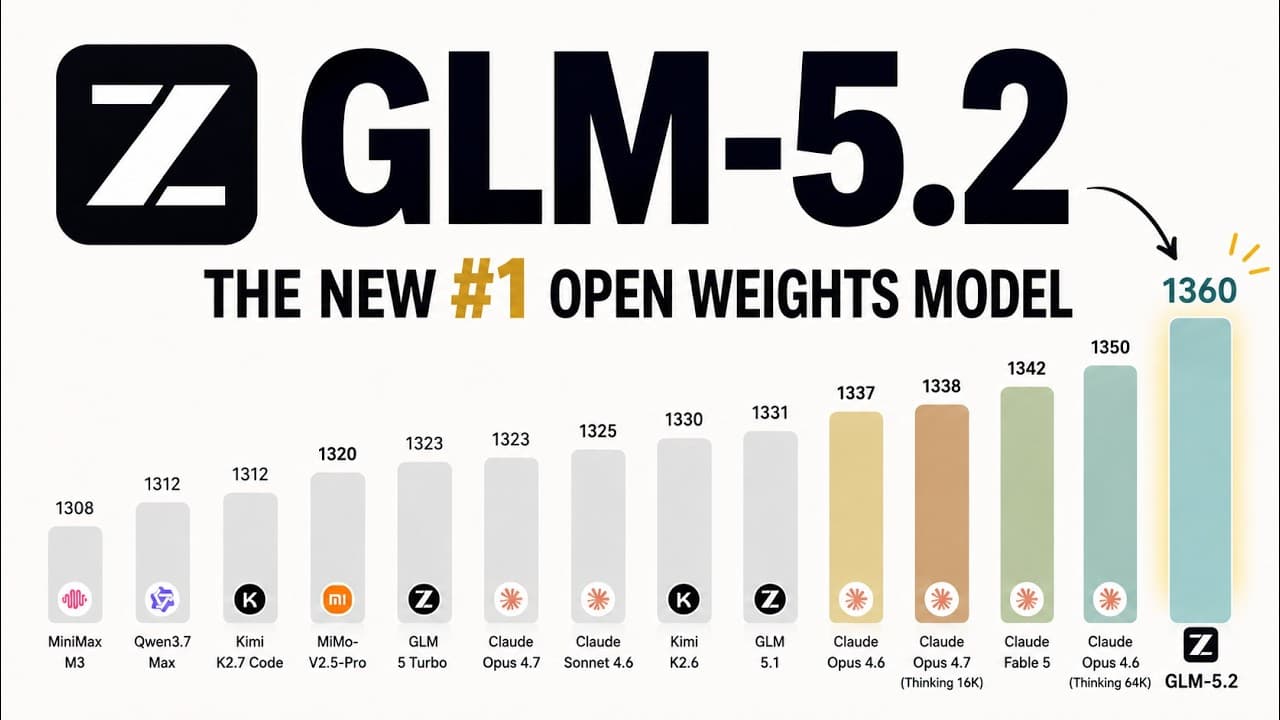
Faros AI's 2026 telemetry across 22,000 developers on roughly 4,000 teams found median code review time up 441.5% and time to first review up 156.6%, while throughput per developer rose 33.7%. Teams ship more and wait longer, at once. Part of that traces to context windows long enough to attempt whole features in one pass, as with GLM-5.2 and its 1M-token context. Bigger context, bigger diffs, longer queue.
Code churn up 861% is the number that should worry you. That's not output, that's rework: code written then thrown away, which is what happens when review can't keep up with generation.
LinearB's 2026 benchmarks, from 8.1 million pull requests across 4,800 teams in 42 countries, sharpen it (LinearB, Software Engineering Benchmarks Report, 2026). AI-assisted PRs run roughly 2.5 times larger, wait about 5 times longer for a reviewer, and merge at under 40% of the unassisted rate.
Two thirds of AI-assisted pull requests don't merge within a month. The code got written. It just never landed.
Did the GitHub Outage Actually Matter?
Yes, but not for the reason people posted about. GitHub's August 17 incident ran 13:40 to 21:15 UTC, about seven and a half hours, with error rates near 20% on web and API traffic and around 50% on archive downloads (CyberInsider, August 2026). One bad afternoon isn't a strategy shift.
It matters because of the arithmetic. A 99.9% uptime target allows 8 hours 46 minutes of downtime per year. This one incident burned roughly 87% of that in an afternoon.
Apex36 analysis. Outage window per CyberInsider, August 2026
It also wasn't isolated. Trackers logged 257 GitHub incidents between May 2025 and April 2026, 48 of them major, with an average recovery of 6 hours 7 minutes (BigGo Finance, August 2026). Roughly one major incident a week. That's the opening, not the single dramatic afternoon.
And Cursor took it. The launch date was locked weeks earlier, but the response landed in hours: a Cursor employee posted on X mid-incident, "GitHub you too? Would be a shame if a decent alternative launched today," then followed with "Check it out!" and the announcement link. That's the actual smart move, and it's a different skill from good timing. You can't schedule a rival's outage. You can decide in advance who's allowed to rewrite the launch copy on the day, and how fast.
Still, be honest about scale. GitHub hosts more than 180 million developers and 630 million repositories, and merged an average of 43.2 million pull requests a month in 2025 (GitHub, Octoverse 2025). Origin is two days old.
What's Missing From Origin Right Now?
Most of what makes it "agent-first." The beta ships repos, PRs, search, sync, and agent access. It does not ship commit provenance tracking (which agent, which model, which session, which instructions), first-class agent permissioning, or the agent-native review surfaces that Cursor described when it announced the platform in June (Digital Applied, August 2026).
The practical gaps for a real team are more mundane, and more blocking:
Capability
GitHub
Cursor Origin (Aug 2026 beta)
Repos, PRs, diffs, branch protections
Yes
Yes
Agents attached to the review surface
Via Agent HQ
Yes, native
Issues and Projects
Yes
No, and they don't migrate
CI/CD
Actions, mature
Depot and Buildkite only; Actions config and secrets aren't copied
Not disclosed (Anysphere holds company-wide SOC 2 Type II)
Commit provenance for agent-written code
No
No, despite being the stated premise
Published performance benchmarks
Public status history
Demo figures only (296,000 clones/hr, 22 commits/sec)
Pricing certainty
Published tiers
Bundled during beta; no GA date, no post-beta pricing
Read the bottom four rows together. Those decide whether Origin is a different kind of forge or just a nicer one, and all four are still open.
There's also ownership. SpaceX closed its $60 billion all-stock acquisition of Anysphere on August 14, 2026, three days before the beta. If you're deciding where your source code lives for the next decade, who owns the host is a legitimate input.
Should You Actually Move Your Code to Origin?
Not yet, and Origin's own design agrees. Because sync keeps GitHub canonical, the beta is built to be tried without committing to it. Treat it as a second UI over your existing repos, not a migration.
When we evaluate a hosting change for a client, the first question isn't "is the new thing better?" It's "what does leaving cost?" Nearly every team burned by a platform move got burned on export, not import. So test the exit before Origin holds anything you can't rebuild: push a native repo, clone it back out, and confirm every branch, tag, commit hash, LFS object, submodule, and PR discussion survived. If the discussions don't come out, you don't have a repo, you have a rental.
A reasonable sequence for the quarter:
Sync one non-critical repo and watch whether two-way comment sync holds up under real review load.
Measure the thing Origin claims to fix. Track time to first review and 30-day merge rate on agent-authored PRs. If those don't move, it isn't solving your problem.
Keep CI where it is. Don't rewrite pipelines during a beta.
Re-evaluate at GA, pricing especially. Bundled-during-beta is a well-worn pattern, and nothing regulated should land there until Origin publishes its own security controls.
If your PR volume is mostly human and your review queue is healthy, there's no urgency here. The case scales with how much of your code your agents write, which is worth weighing against where agentic coding costs actually land.
What Happens Over the Next Year?
GitHub isn't standing still, which is the part that decides this. In 2026, GitHub has already run more than 60 million automated code reviews, with roughly one in five involving an agent, and its Agent HQ strategy lets teams orchestrate third-party agents from Anthropic, OpenAI, Google, Cognition, and xAI inside GitHub itself (FlowVerify, "The AI Code Review Bottleneck, By the 2026 Numbers," 2026).
So the fight isn't "will developers leave GitHub." Almost nobody will. It's over which platform owns the agent review surface. GitHub has distribution; Cursor has focus. And cheaper mid-tier models keep widening the gap between code generated and code reviewed, the dynamic behind Claude Sonnet 5's near-Opus performance at a lower price. Whoever owns the review surface when that ratio worsens owns the workflow.
The signal to watch isn't Origin's user count. It's whether Cursor ships commit provenance and agent permissioning before GitHub does. Those are the features that make an agent-first forge structurally different from a human forge with agents bolted on. Right now, neither company has shipped them, and both know it.